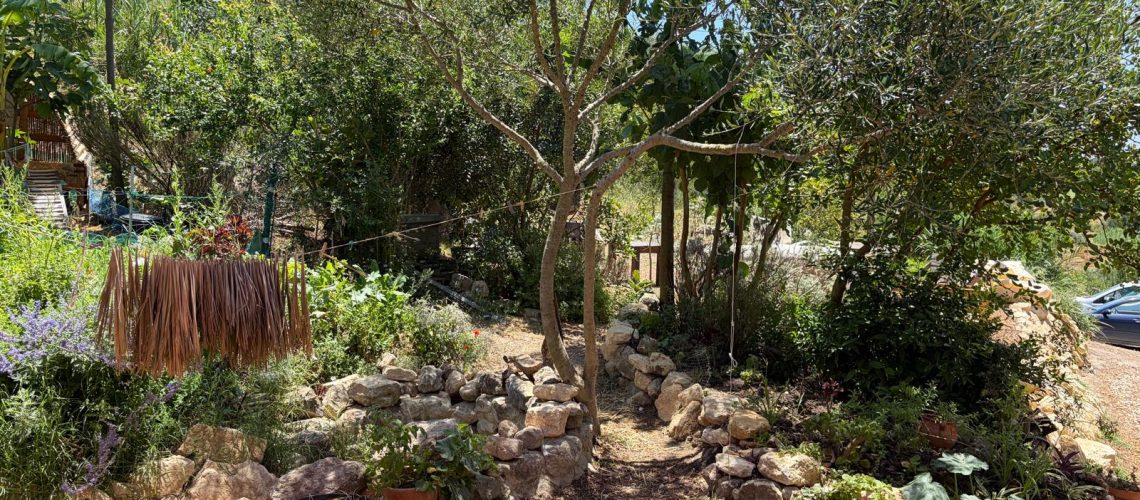
After a stunning spring—filled with wildflowers, lush growth, and unusually mild temperatures—summer has suddenly arrived at Almenara. The riot of colour is giving way to shades of gold, beige, and dusty green, while the ground is beginning to harden and crack under the Andalusian sun. Now that the land has finally dried out, we have been able to repair some of the damage caused by this winter’s exceptional rains around Catalina Kitchen, while also installing new drainage features to help prevent similar problems in the future.
Summer brings a different rhythm to life here. It is a time to slow down after a busy season of courses, festivals, school projects, and community activities. Our attention turns toward caring for young trees and new plantings, helping them survive the long, hot months ahead. It is also a season of reflection. As we reach the midpoint of the year, we take time to evaluate what has worked, what has not, and what we are learning. This process of observation, feedback, and adaptation is at the heart of our approach, helping us steer Almenara toward the future we hope to cultivate.
Festival Almenara
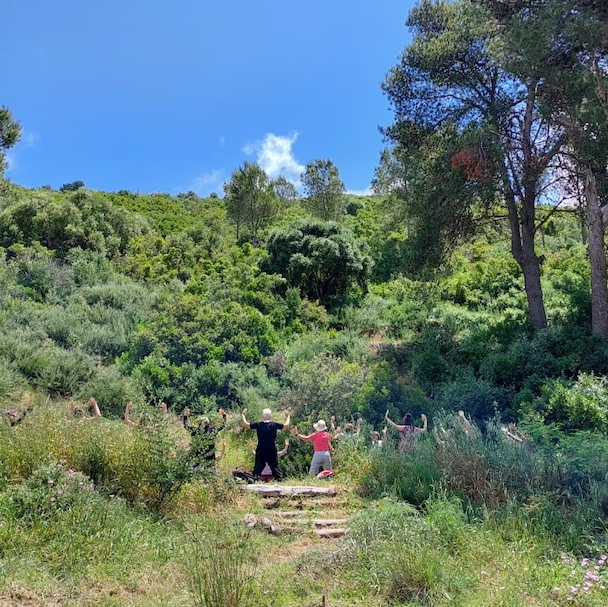
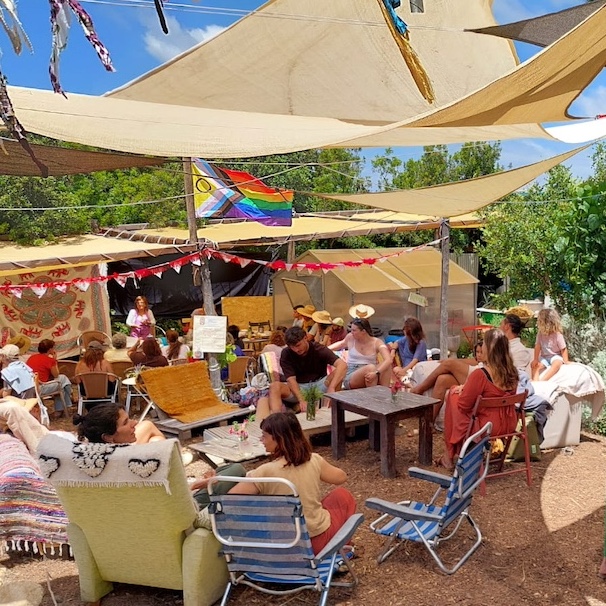
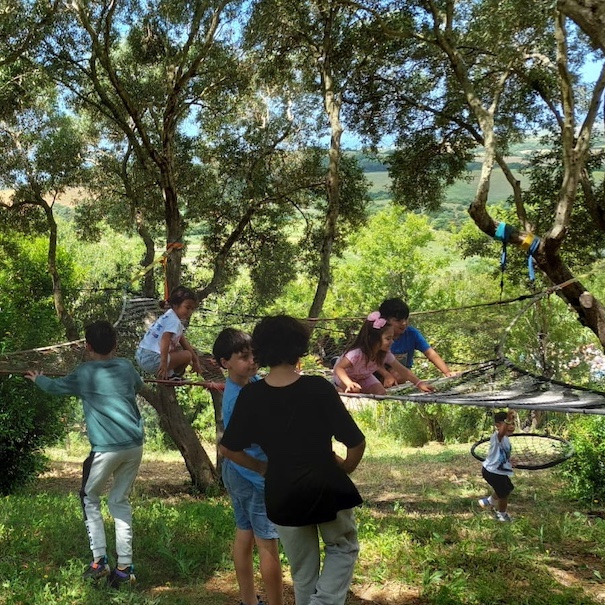
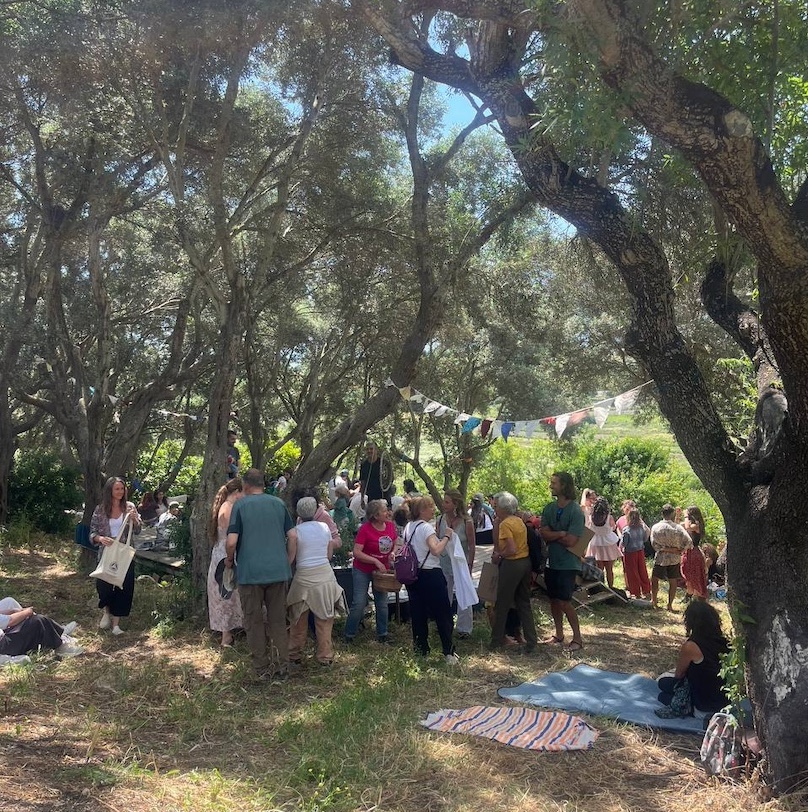
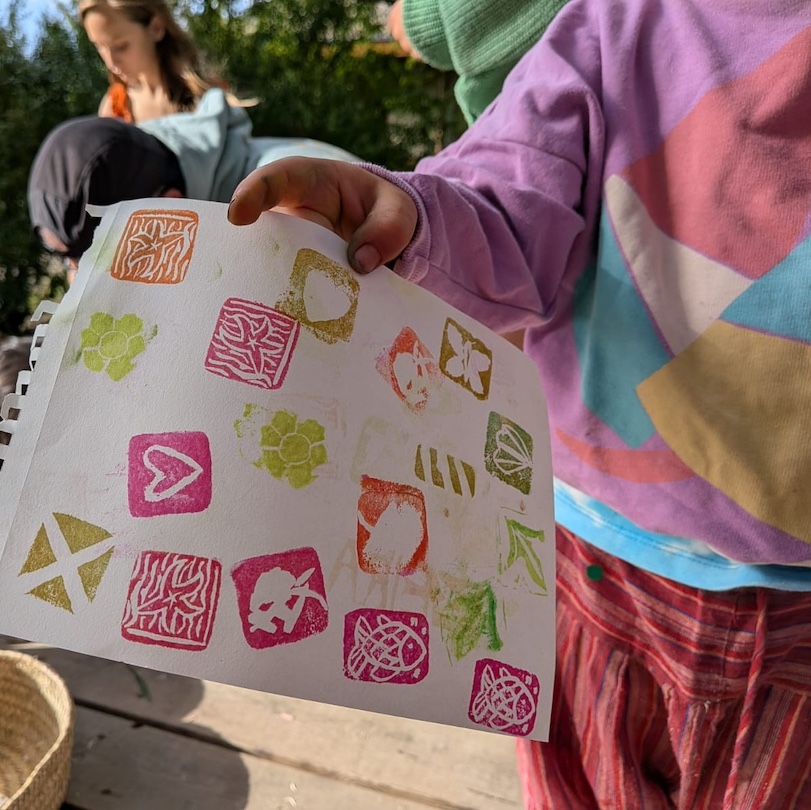
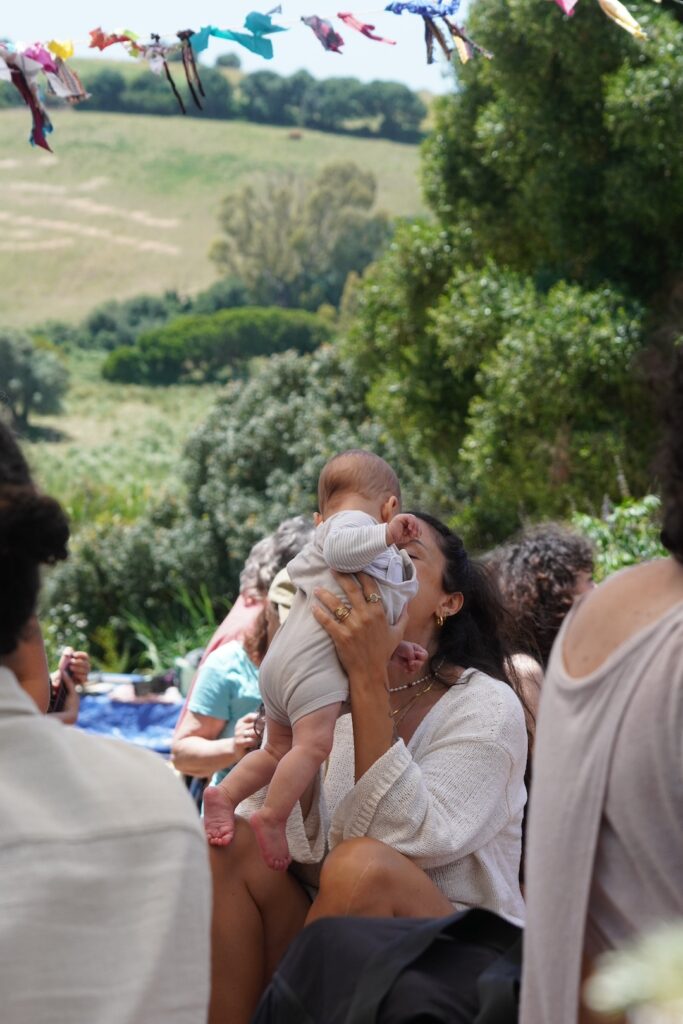
This year Almenara Festival focused on “Caring for the Future.” More than 500 people came to Catalina, walking down through the Mediterranean woodland that is naturally regenerating on the hillside, enjoying the sudden “reveal” moment when the view opens out to take in the water retention landscape, the valley and the fields falling away to the Atlantic coast.
Festival Almenara is a community event which is co-created with all our friends and neighbours and we love the way people gather to share their wisdom and skills in the talks and workshops that make up the programme, to learn from each other, and to help out on the day in ways visible and less visible.
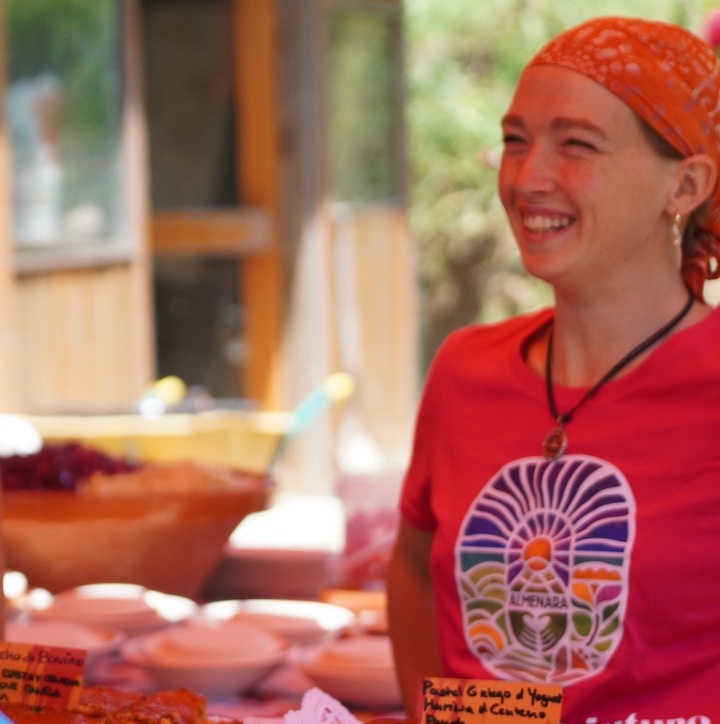
Finca Vegana again did a great job with the food, the bar was rocking its new “VIP Lounge” and we were delighted to receive even more families than last year. The Human Library gave us all a chance to catch up with the news from the many regenerative projects our community is involved in as well as make new connections. The day closed with a kirtan singing circle as the sun was going down followed by a fantastic dance session under the stars.
Thanks to everyone who came and who helped out, and we’re already looking forward to next year!!! We’re still gathering photos together, but keep an eye out on the web for the album when we post it.
Almenara T-Shirts
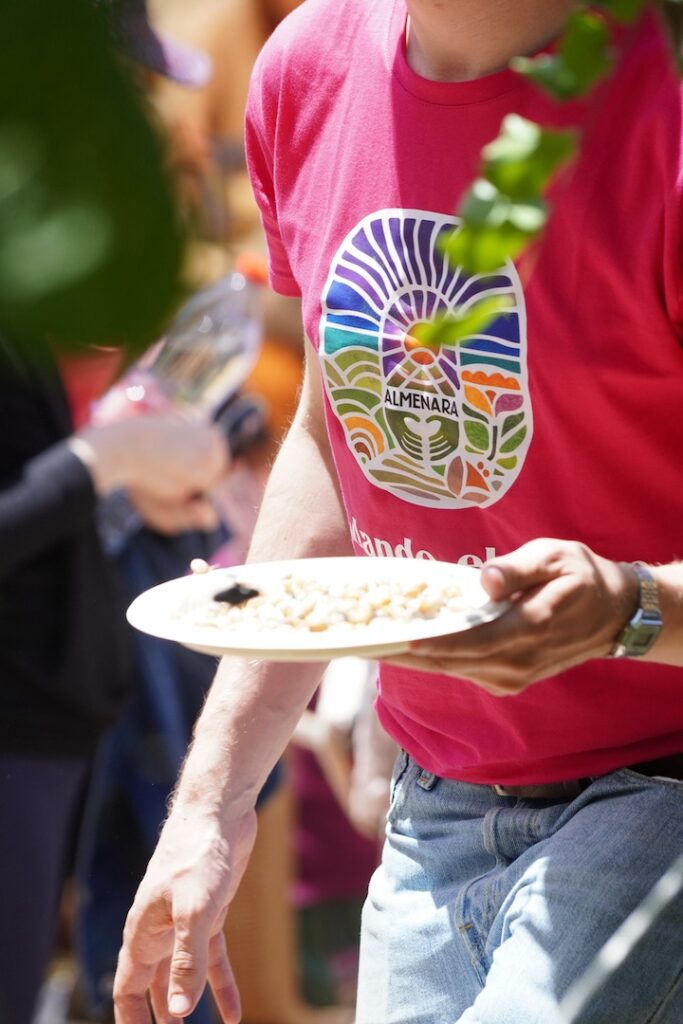
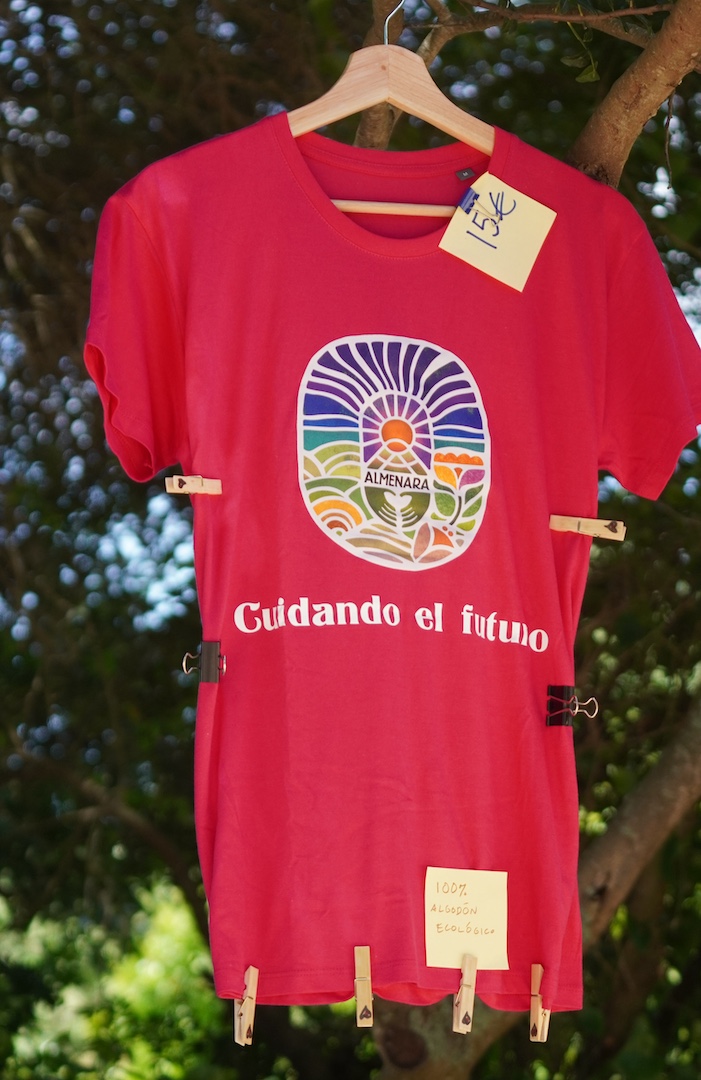
For this year’s Almenara Festival, we created a new series of T-shirts featuring the slogan “Cuidando el Futuro” (“Caring for the Future”) in a vibrant fuchsia design.
The shirts are made from organic cotton and sourced locally through La Pájara in Vejer, helping us support a local business while reducing the environmental footprint of production.
If you’d like to purchase a T-shirt and help support Almenara’s activities, please get in touch.

OASIS — Social Permaculture Course
From May 25–30, Candela Vargas (Objetivo de Luz) and Pablo Bozas (Permaneser) facilitated OASIS, an immersive introduction to Social Permaculture hosted at Catalina.
Eleven participants from outside Almenara joined residents and volunteers for six days of learning, reflection, observation, and design. Rather than focusing on gardens, water systems, or land management, Social Permaculture explores the patterns, relationships, structures, and cultures that shape how people live and work together.
Throughout the course, Almenara itself served as a living case study. Participants examined our governance, community life, challenges, and aspirations through a range of Social Permaculture lenses and design frameworks. The experience brought spaces of deep reflection and opportunities to process complex group dynamics, while it generated fresh perspectives, thoughtful questions, and valuable reflections for both visitors and the Almenara community.
The course was also an opportunity to experiment with Almenara as a learning laboratory—using a real, evolving project as the ground on which to explore how regenerative culture can be designed, practiced, and continually improved. For more information on courses like this sign up for Objetvio de Luz’s “dominical”, their weekly newsletter. https://objetivodeluz.substack.com/
EMCCINNO Projects
We are now roughly halfway through EMCCINNO, our three-year Horizon Europe project exploring the intersection of arts, culture, and the climate transition.
Within the project, Almenara serves as a “pilot” or living laboratory, where we experiment with ways of fostering regenerative relationships between people, place and ecosystem. Our work can be grouped into three interconnected threads: the Culture of Trees, the Culture of Water, and the Culture of the Commons.
From January to June, we completed the first iteration of our prototype, testing activities, partnerships, and approaches across these three themes. We are now entering a period of reflection, evaluation, and learning. The insights gathered during this phase will help shape the second iteration, which will be implemented during the 2026–2027 school year.
Below are some updates from across the pilot and the activities that have emerged so far.
JARA: La Janda Acción RegenerativA
We have completed the first cycle of JARA (La Janda Acción RegenerativA), a series of twelve volunteer action days held over the past months.
With the support of Candela and Aitor from Objetivo de Luz, local volunteers came together to experiment with a range of regenerative land-based practices in and around Catalina. Activities included syntropic agroforestry plantings, Miyawaki-style tiny forests, care for newly established tree basins, and other permaculture interventions aimed at restoring biodiversity, improving soil health, and strengthening ecological resilience.
More than practical work days, JARA has become a space for learning, collaboration, and connection—to the land, to one another, and to the wider landscape of La Janda. Along the way, participants have shared knowledge, developed new skills, and enjoyed many memorable meals together.
In the coming season, we hope to expand JARA beyond Catalina, supporting stewardship initiatives in Santa Lucía and other shared spaces across the region. If you would like to participate, join our Telegram group, where we share upcoming activities and opportunities to get involved: @almenarafestival2024.
Aula Verde at IES La Janda
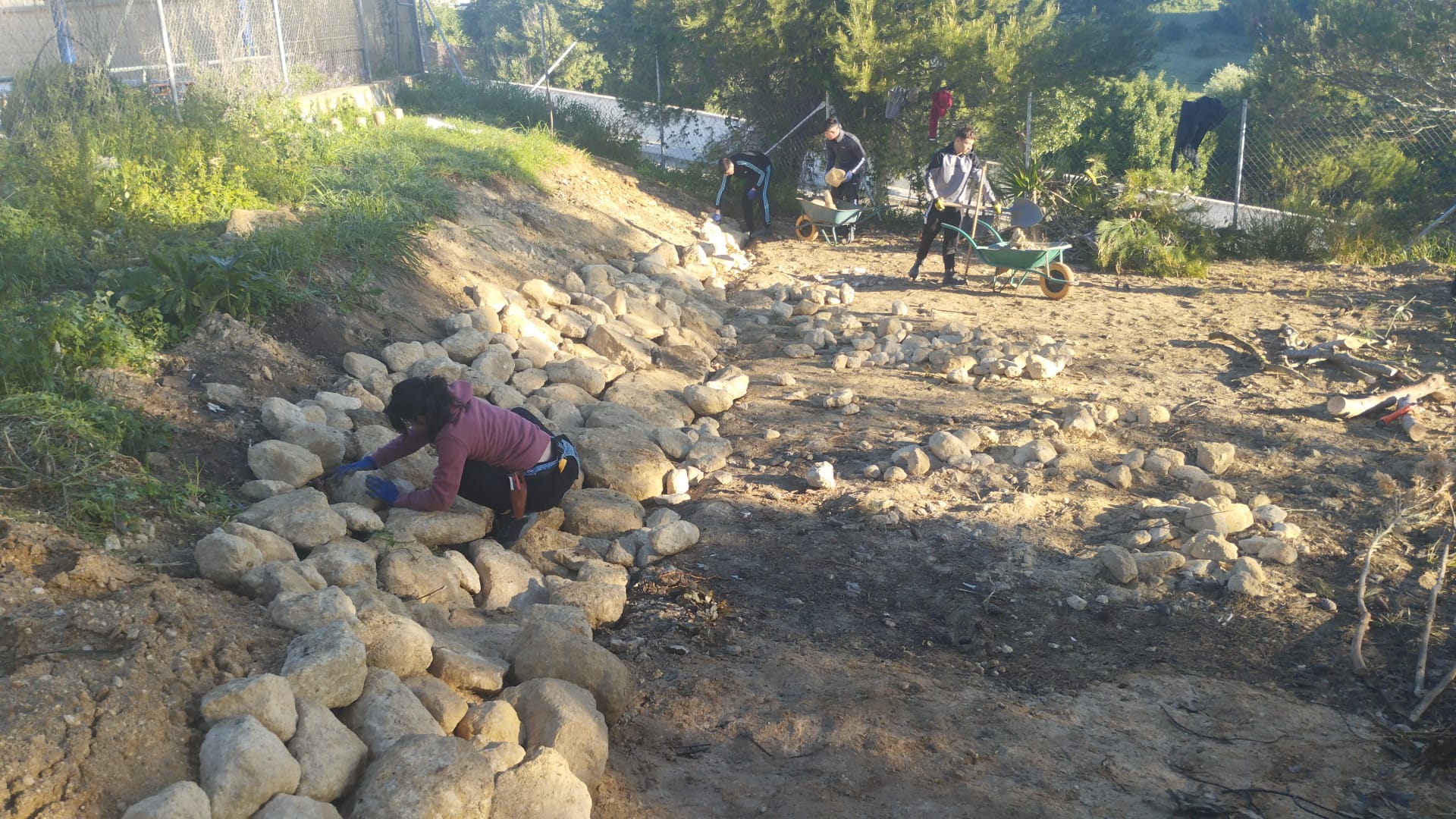
Since January, we have been collaborating with IES La Janda to develop their Aula Verde (Green Classroom). Adjacent to the school lies a 1,600 m² wooded area where an earlier project, supported by a small grant, laid the foundations for an outdoor learning space. Recognising the enormous potential of this site, we have been working with both the school’s vocational training programme in agroforestry and gardening (FP Agroforestal) and biology students to co-design and co-create its next phase.
As part of this process, Candela from Objetivo de Luz has been introducing students to basic permaculture principles and participatory design methods, helping them imagine how the space can evolve to serve both people and nature.
During this first phase, students have removed selected trees, created accessible terraces for outdoor learning, and built a stone retaining wall. These interventions improve access, retain rainwater, and begin shaping the site into a multifunctional educational landscape.
In the autumn, we will move into the next stage: developing planting strategies and accelerating the ecological transformation of the space. As vegetation establishes, the terraces will help slow and infiltrate water, trees will provide shade and moderate temperatures, and the Aula Verde will increasingly become a shared commons for the entire school community.
This project brings together all three threads of our EMCCINNO pilot—water, trees, and the commons—while giving young people the opportunity to actively shape the future of their own learning environment.

Pequeñas Resistencias (Small Acts of Resistance)
Over the past months, we have also been working with IES La Janda to develop a curriculum about the commons in collaboration with students from Estudio Medioambiental del Entorno, an elective environmental studies course.
This year’s sessions have served as a testing ground for a series of games, activities, and discussions designed to explore the differences between private, public, and common spaces, while encouraging reflection on privilege, rights, responsibility, and collective care.
One of the highlights of the programme was a visit to Catalina, where the entire class spent a day exploring our living laboratory and experiencing a real-world example of a community-managed commons. Through walks, conversations, and hands-on activities, students were invited to think about how people can work together to care for shared resources and landscapes.
The day concluded with a collective tree planting, leaving a tangible mark on the land and creating a lasting connection between the students and Catalina. We hope these experiences will continue to grow—not only in the landscape, but also in the students’ understanding of citizenship, stewardship, and the commons.
Ampadrinar un Alcorque (Adopt a Tree Basin)
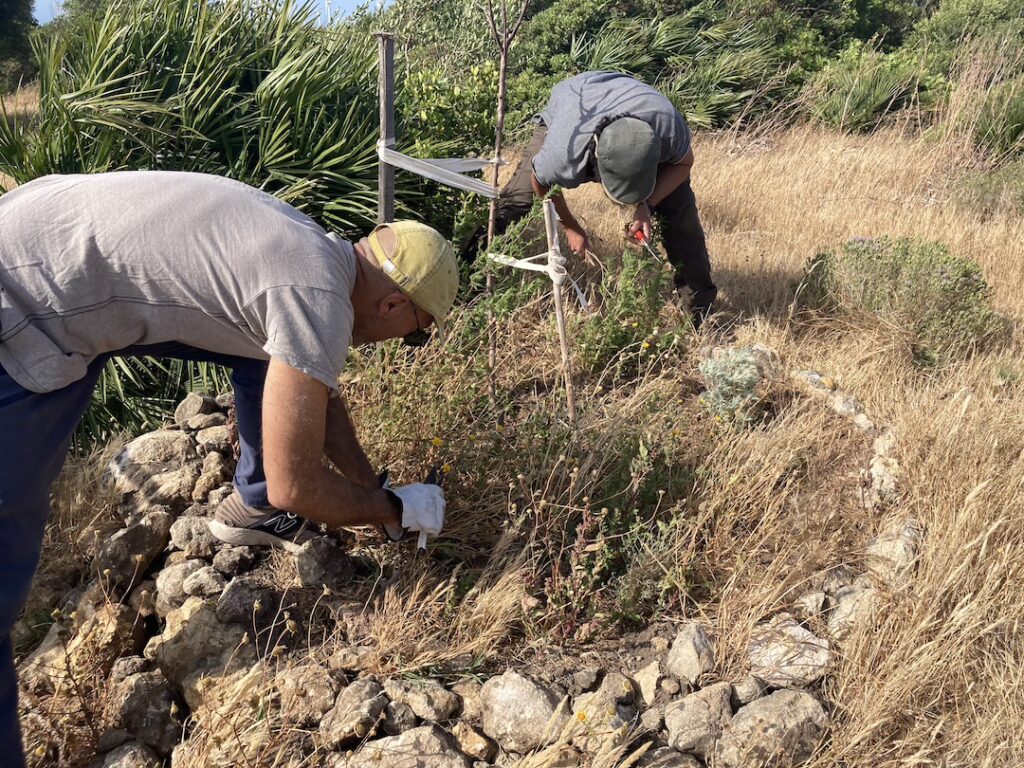
As part of our EMCCINNO pilot, we launched Ampadrinar un Alcorque (“Adopt a Tree Basin”) in February. Together with local groups and associations, we established twelve tree basins planted as small syntropic “nests”: a diverse mix of trees, shrubs, aromatic plants, cuttings, seeds, manure, and mulch, all arranged within shallow bowl-shaped depressions designed to support growth and water retention.
The basins are located at the top of our watershed, along the Cañada Real de Buenavista, a popular viewpoint and resting place overlooking the surrounding landscape. For us, this is a special location where three worlds meet: the commons (the historic public grazing route), the public realm (the Camino de los Soldados), and the private stewardship of Catalina. The initiative touches all three threads of our EMCCINNO pilot—water, culture, and the commons—but most importantly, it explores how active citizenship can help care for and regenerate shared spaces. In this liminal zone between public, common, and private realms, the project invites local people and organisations to become co-stewards of a landscape that belongs, in different ways, to all of us.
Our long-term vision is to gradually create a series of shaded, productive, and ecologically rich resting places along this exposed and windy ridge. Over time, these plantings could become part of a broader green corridor, improving biodiversity, cooling the microclimate, and offering edible and useful species to passers-by.
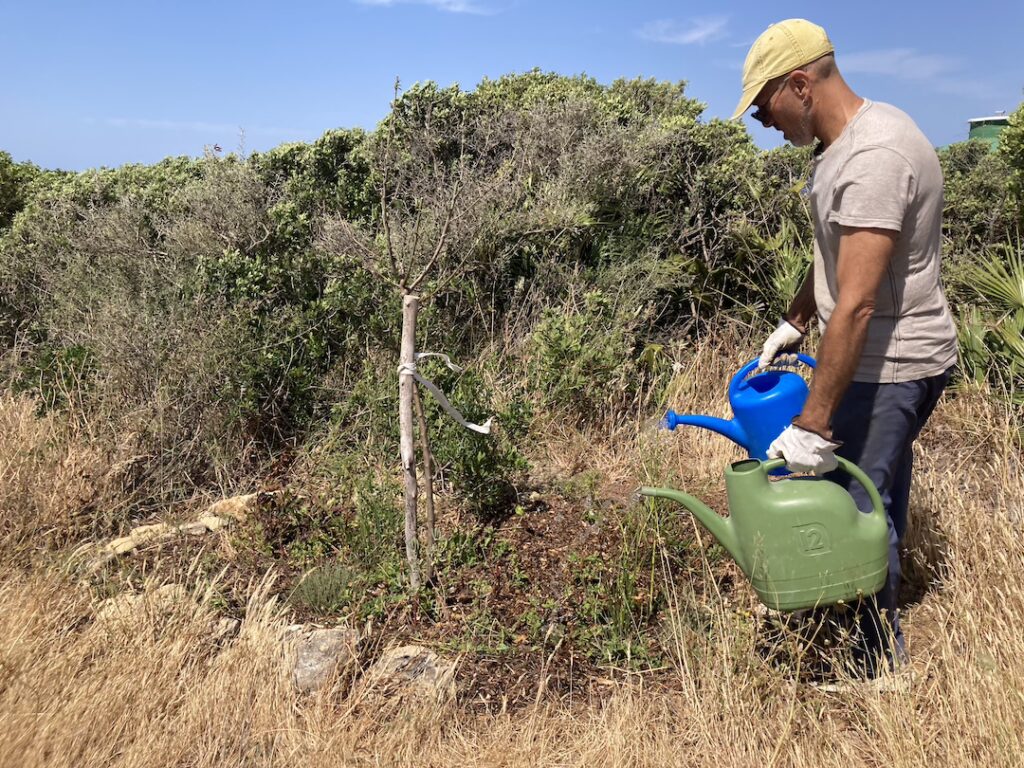
In the short term, twelve groups and associations have adopted the basins, and together we have organised a watering system to help the young plants survive the Andalusian summer.
The project has faced challenges. Some trees were vandalised and removed, while others succumbed to the difficult conditions. Yet the diversity built into the syntropic plantings has created resilience. Aromatic herbs, companion plants, and self-seeding species have continued to thrive, and many of these small islands are now buzzing with life.
This past weekend, we came together to care for the basins: pruning, chop-and-drop mulching and applying a fresh layer of mulch. In autumn, we hope to continue the next phase of the project, enriching existing basins and potentially creating new ones.
Permaculture Magazine Articles
We have continued our collaboration with Permaculture Magazine, publishing a new article every three months. Many of our earlier articles are now available through our blog, where readers can explore the evolution of our work over the years.
Our most recent series focuses on the relationship between permaculture, culture, and public policy through the lens of the EMCCINNO project. As we engage with artists, cultural organisations, researchers, schools, and local communities, we are exploring how permaculture thinking can contribute to the broader cultural response needed in the face of the climate crisis.
Through these articles, we share reflections from our living laboratory in La Janda and highlight the different strands of our pilot work—from trees and water to the commons—with an international audience of practitioners, educators, and changemakers.
You can find our published articles on our blog and follow along as this conversation continues to evolve.