Almenara – Imagining a Regenerative Future
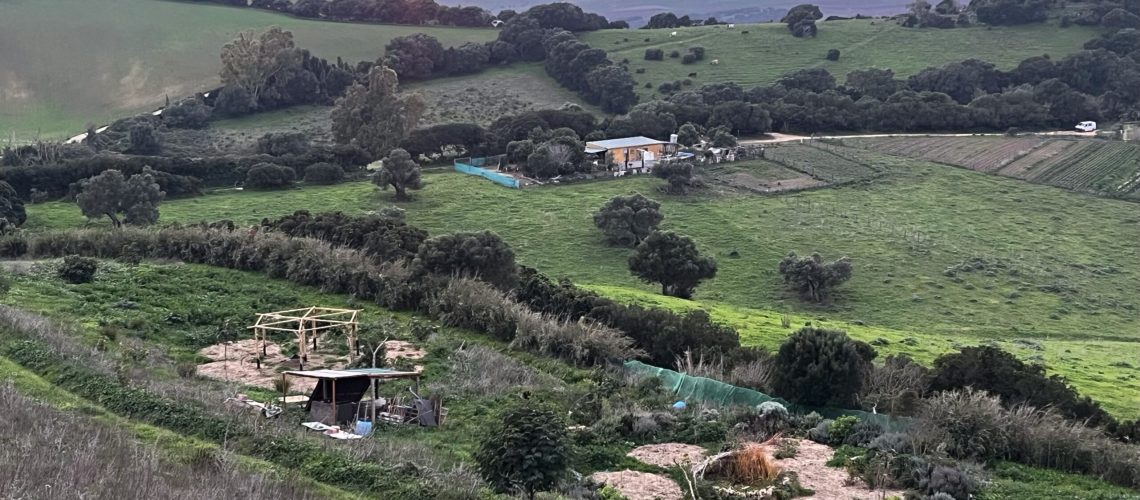
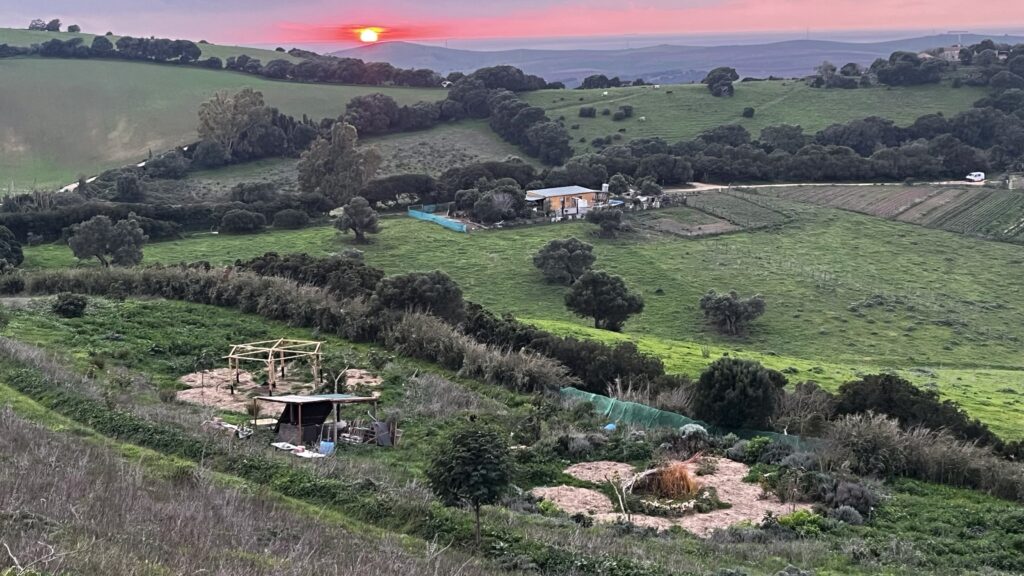
Welcome to our second monthly newsletter! (Don’t worry, we’ll stop patting ourselves on the back after we’ve done 3 or 4.) Here at Catalina, the rains continue to fall, and the lush green landscape has become such an intense colour, that it is sometimes hard to believe it’s real. As we write, we’ve already had more rain in this season than we do in an entire good season. The land is responding gloriously. It’s amazing to see trees which had minimal growth for years suddenly shooting up, and swales which were previously dotted with a few little plants suddenly turning into swathes of trees swaying in the wind. This winter has provided perfect conditions for planting trees, so we’ve been taking advantage of this opportunity.
It’s all about the trees! Agroforestry experiments
We’ve spent the last month or two preparing for and starting to plant new agroforestry experiments. Our focus is two-fold: using as little water as possible and growing as much food as possible. Some experiments are more about creating wildlife corridors with local varieties, while others are more focused on food production. In the past we’ve planted thousands of trees in far-off corners of the property, only to find ourselves unable to water them to keep them alive over the long, dry summer months, so we’re now designing to consolidate our efforts. Thomas, our resident arborist, was joined this fall by Vince, his twin brother, also an arborist. With the help of some hard-working volunteers, this was just the push we needed to design and implement our new experiments.
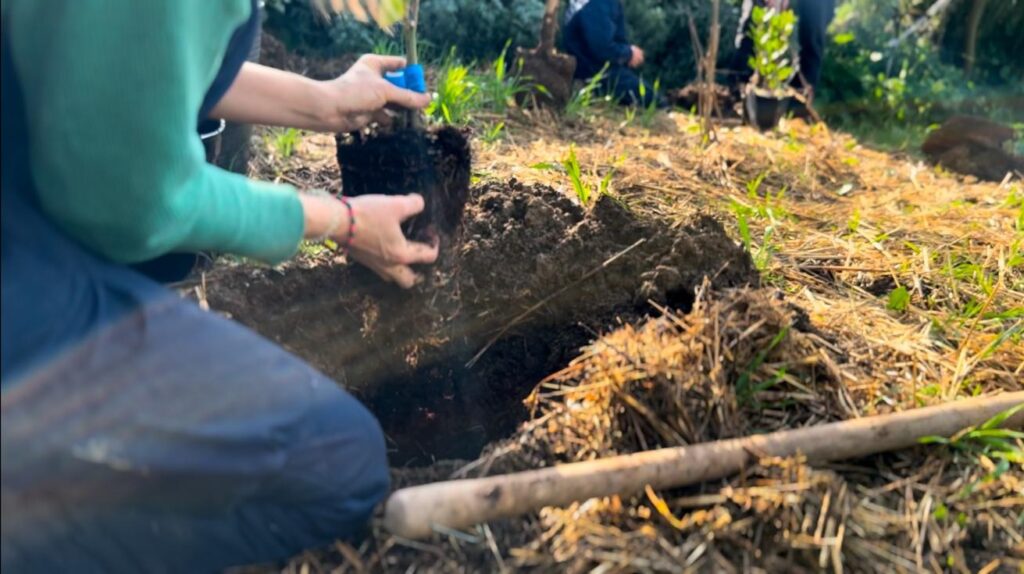
Swale revival
Barrio Norte is a sun trap that gets battered by extreme heat, and with its minimal topsoil only the hardiest of species have survived in our swales there. This is so harsh in the summer, that our nickname for that part of the land has become Barrio Muerte. Realizing that we need to improve the soil life in order for perennial vegetation to thrive there, in September we worked with a group of 60 young volunteers on a CAS study programme to line the ditches of two swales with composted manure and straw to create the right conditions for the much-needed soil life to appear. It’s true that “many hands make light work”, and with this group of 16- and 17-year-old students, the landscape was irrigated with a lot of laughter and joy too. We are now reaping the benefits: after the abundant rains we’ve had this fall, the soil was rich and soft, and after forking it we’ve now gone in and sowed “nests” of seeds and cuttings in this newly enriched soil. We’re excited to see how this develops in the coming months, as a relatively low-maintenance intervention. Although we plan to water these lines, at least in the first summer, we’re confident that sowing perennials in-situ will provide great results with much less need for water in the longer term.
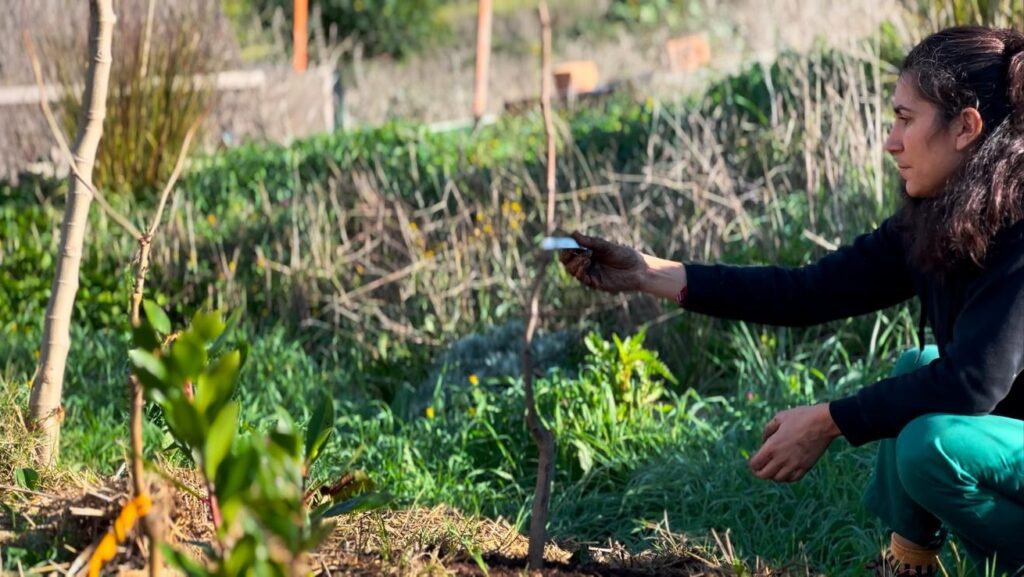
New syntropic lines
Syntropic agroforestry is a technique of planting dense lines of multi-layered perennial food-forests, and then pruning actively to stimulate and accelerate growth. We have done a few experiments over the years, and these have impressed us with the density and biodiversity achieved in small spaces, so we decided it was time to design some lines which could provide patterns for producing high-value food appropriate to our ecosystem. We’ve been building up our nursery of cultivars of fruits that we love and know thrive on our land. Imagine in the space of a few metres having Afghan mulberries, feijoas, guavas, goji berries, raspberries, all occupying different strata of a forest! Of course it will take years until we can harvest all those fruits, but in the meantime, we will be growing annual vegetables as a “placenta”, a ground-cover layer which will protect and feed the trees as they start to fill in. We started the year by planting 3 lines, a total of over 60 linear metres, home to hundreds of trees, in the entrance of Catalina, just below the Olivar. If you’re interested to find out more about syntropic approaches, watch this video filmed at Catalina by the Objetivo de Luz team this autumn.

Objetivo de Luz
We’re really excited to announce that Candela, Aitor, Eira and Kalima – the Objetivo de Luz team – are back at Catalina, and they’ll be collaborating with us over the next 3 months. They’re here to film the building of our community space using natural building techniques (see below) so the process can be shared on their channel. But we know a lot of exciting things will happen through this collaboration that haven’t been planned yet. Their YouTube channel (http://www.youtube.com/c/ObjetivodeLuz) has +340k followers, an inspiring community of people interested in imagining regenerative futures. Sign up for their newsletter if you want to keep up with all they do, and meanwhile, here’s a link to a video that is hot off the press, filmed last weekend during the planting of one of the syntropic experiments mentioned above: https://acortar.link/2fyQb3.
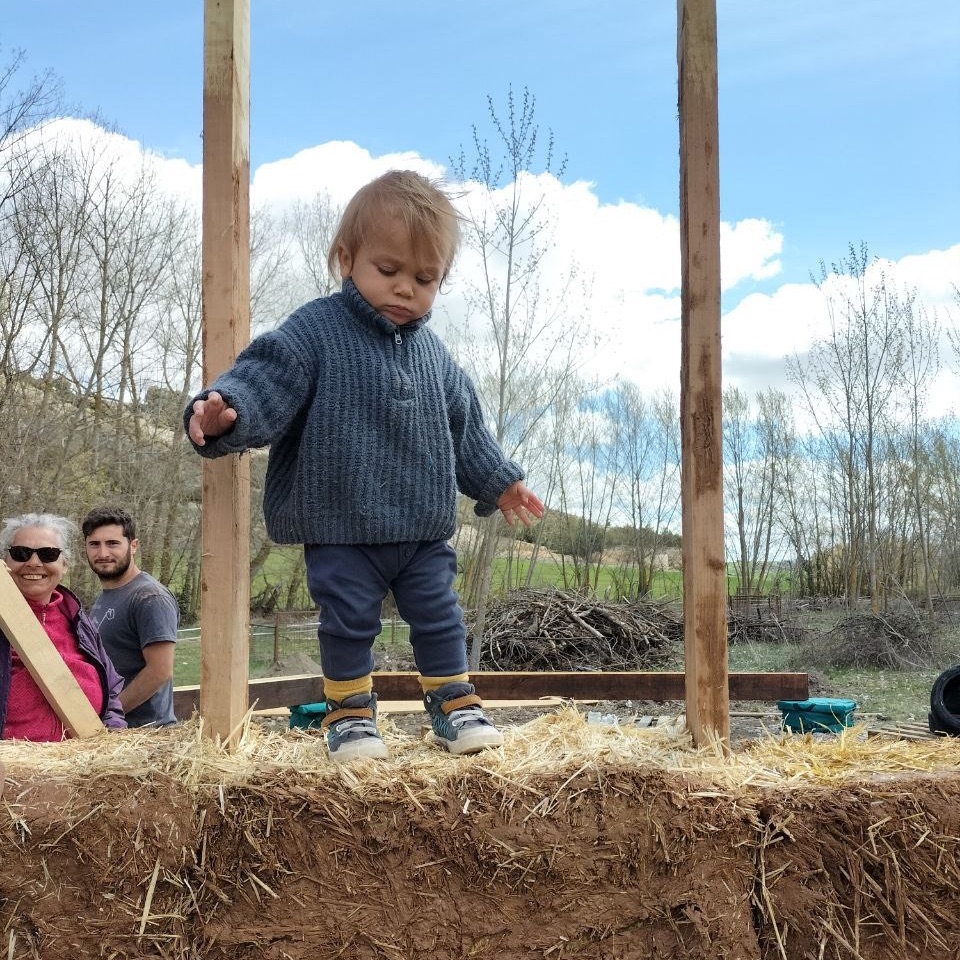
Natural building
The natural building volunteer community we mentioned in the first issue of our monthly newsletter received a huge response. More than 70 people requested more details and nearly 30 applied with their motivational letters and CVs. We spent a lot of the Xmas holidays interviewing people and have now completed the difficult task of selecting participants from such excellent applicants. It was hard work, but at the same time very inspiring to talk to so many people interested in learning how to live in a different relationship with the planet, and we’re really looking forward to receiving the group. They’ll be arriving and landing a few days before we start building on Monday 17th February. Watch this space for progress reports on how we get on with the cells-under-tension natural building technique, and for announcements of open days when local volunteers will be able to come to participate and learn the technique hands-on between February and April.

Or maybe it’s all about the volunteers…?
Our work would not be possible without the generous help of hundreds of volunteers over the years, both local and from further afield. We’ve had a lot of requests from people who want to come and give us a helping hand and we’d like to reactivate our open days for local volunteers. In addition to the work planting trees in the coming weeks, as we’ve said, we also intend to offer regular open days during the natural building learning community over the next few months. If you are interested in joining us for these days, we’ll be making regular announcements in our Telegram group, which you can join with this link: https:t.me/almenarafestival2024.
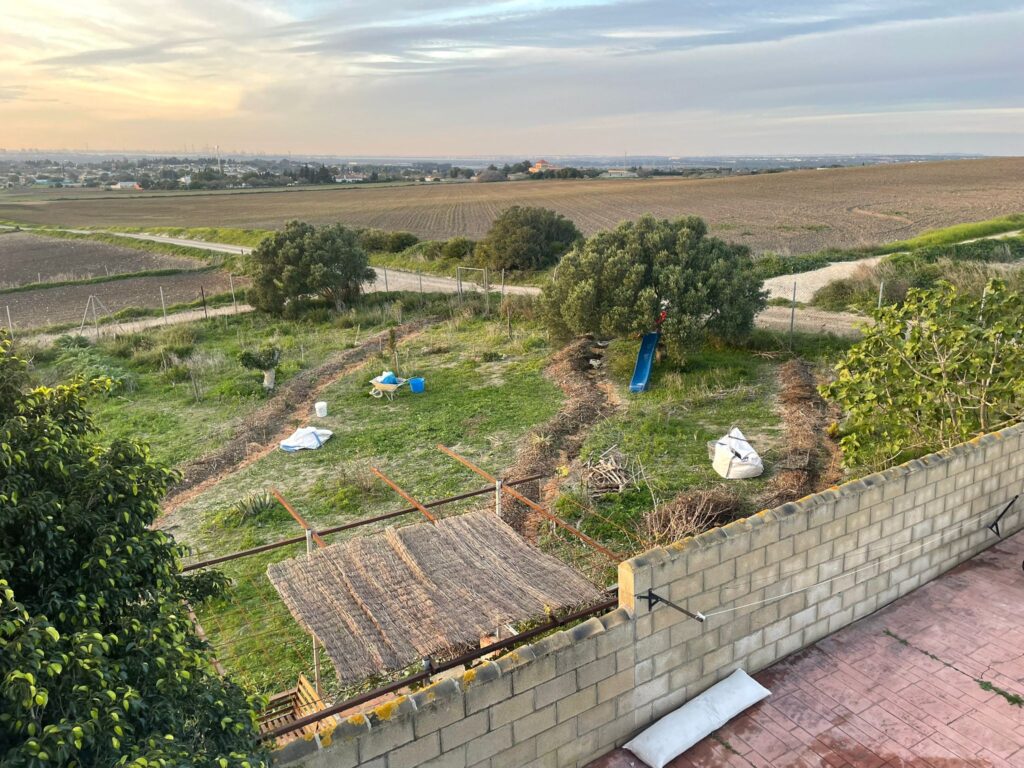
Permablitz at Andrea and Sandra’s place in Chiclana
And still on the subject of volunteer opportunities, in December we held a permablitz to support a local member of our permaculture roundtable group. The Permablitz movement started in Australia, and usually involves an informal gathering over a day during which a group of people come together to share skills related to permaculture and sustainable living while building community and having fun. More usually associated with an urban garden makeover, this format of teaching while implementing a design in community is an incredible way to support both a project and a network of permaculture practitioners. In this case we designed a small-scale water retention landscape, and a group of friends, neighbours and permaculturists came together to shape the land and plant trees in the swales. The job was well done, and fun was had by all.
Almenara Festival 2025
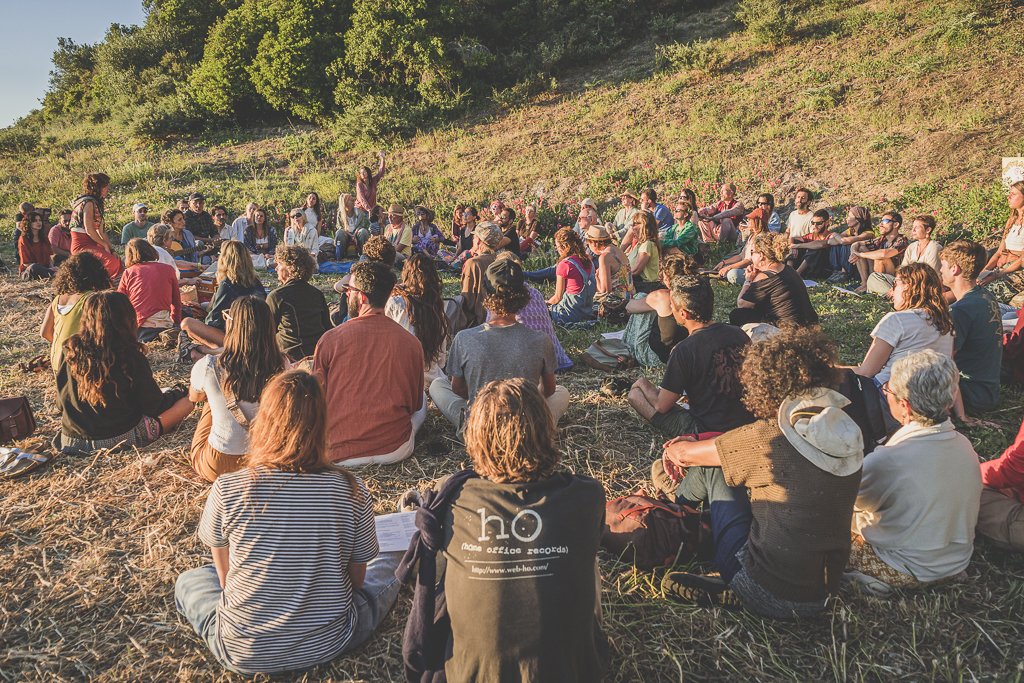
A quick reminder that our fourth annual one-day Almenara Festival is set to happen on Saturday 26th April. This is another event that could never happen without the support of volunteers interested in creating a regenerative future – a community is needed to create this community event! If you’d like to offer a talk or a workshop related to the skills needed to build a regenerative future, if you have a local regenerative initiative you’d like to present, if you’d like to provide some form of entertainment (music, performance…) or if you’d just like to help out on the day, please let us know at info@almenara.online
Almenara Memorial a la Vida
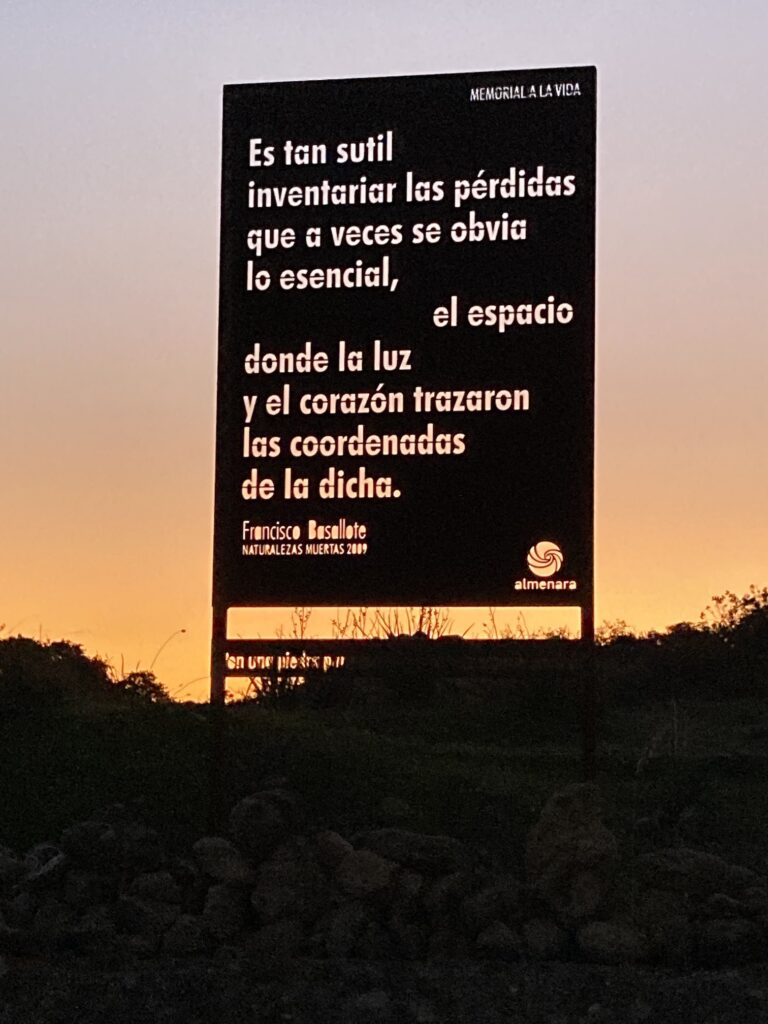
Did you know that we have created a life cairn on the ridge above Catalina? It’s on the edge of our land, where it meets public space, and it’s open to anyone to visit any time. We put a pin on GoogleMaps about a year ago to help people find it, and this week we reached 10,000 “visits” – virtual visits, of course, but we see it and appreciate it as a sign of interest. We’re convinced that the process of imagining regenerative futures requires spaces like this, where we can get in touch with our grief about the scale of loss we are facing. If you’d like to know more about the ideas behind this Memorial to Life, and get inspired to visit it yourself, here’s a link to the article we published in Permaculture Magazine in the Winter 2023 edition, which we have now translated into Spanish too.